


🌙 Sleep Disorders Specific to Pregnancy
During pregnancy, certain sleep disorders can show up 😴: insomnia caused by anxiety or discomfort, snoring or sleep apnea, restless legs syndrome, and even vivid or sometimes distressing dreams. Most of the time, these issues aren’t dangerous, but they can be very draining and affect your mood. Understanding them, talking about them, and finding small coping strategies can make nights—and days—much easier to handle 💜.
1 min read
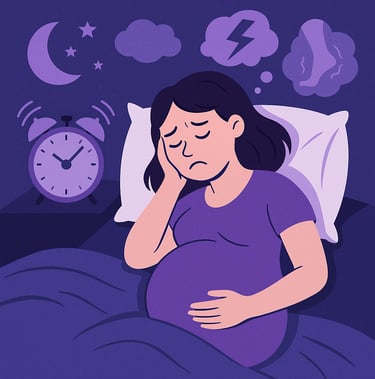
Beyond hormones and physical discomfort, some moms-to-be experience actual sleep disorders. They’re usually not dangerous, but they can be exhausting 😴—and they deserve to be understood.
😵 Insomnia from anxiety or discomfort
Struggling to fall asleep, waking up in the night and unable to drift back off, and starting the day feeling like you haven’t rested?
👉 That’s insomnia—and it affects more than half of pregnant women, especially late in pregnancy.
Possible causes:
Anxiety (fear of birth, worries about baby, body changes).
Physical discomfort (heartburn, pain, cramps, frequent urination).
Nighttime rumination, when worries spiral in the quiet hours 🌙.
This insomnia deepens daytime fatigue and can weigh heavily on mood. That’s why it’s important to talk about it if it becomes overwhelming 💬.
😮💨 Snoring and sleep apnea
In the third trimester, many women start snoring 😅. This is linked to nasal congestion (thanks, estrogen) and pregnancy weight gain.
👉 In some cases, it goes further: sleep apnea—brief breathing pauses that cause repeated micro-awakenings. This affects about 1 in 10 pregnant women.
Though often underestimated, apnea can raise the risk of high blood pressure, gestational diabetes, or slowed fetal growth.
The good news: proper care (like adjusting sleep position or medical monitoring) can improve things a lot ✅.
🦵 Restless Legs Syndrome (RLS)
In the evening or at night, do you feel tingling, discomfort, or an irresistible urge to move your legs? That’s restless legs syndrome.
It affects up to 1 in 4 pregnant women. Causes may include:
low iron or folate,
hormonal shifts (estrogen, prolactin),
uterine pressure affecting circulation.
👉 The result: constant movement right when you’re trying to fall asleep—fragmenting your rest and fueling fatigue.
🌌 Vivid dreams and nightmares
Many moms-to-be report ultra-vivid, sometimes unsettling dreams 😮💨.
Why?
Frequent night wakings make dreams easier to remember.
Hormones change sleep structure, with more “REM” sleep—the stage where dreams are most intense.
👉 These dreams often reflect real concerns: fear of childbirth, protecting your baby, preparing for motherhood.
Even if some nightmares are disturbing, remember: they’re simply your subconscious working through emotions ❤️.
Motherhood
Your space dedicated to motherhood and well-being.
CoNTACT
bellytobaby.fr@gmail.com
© 2025. All rights reserved.