


🌸 Prenatal Anxiety: When the Joy of Expecting a Baby Meets Fear
Pregnancy is a time of joy—but also of anxieties that often go unseen. 🌸 This article explores prenatal anxiety: fears about childbirth, the baby’s health, and the challenges of becoming a parent. Through real stories and practical tips, it helps expectant parents better understand and ease these worries—so they can move toward parenthood with greater calm and confidence.
2 min read
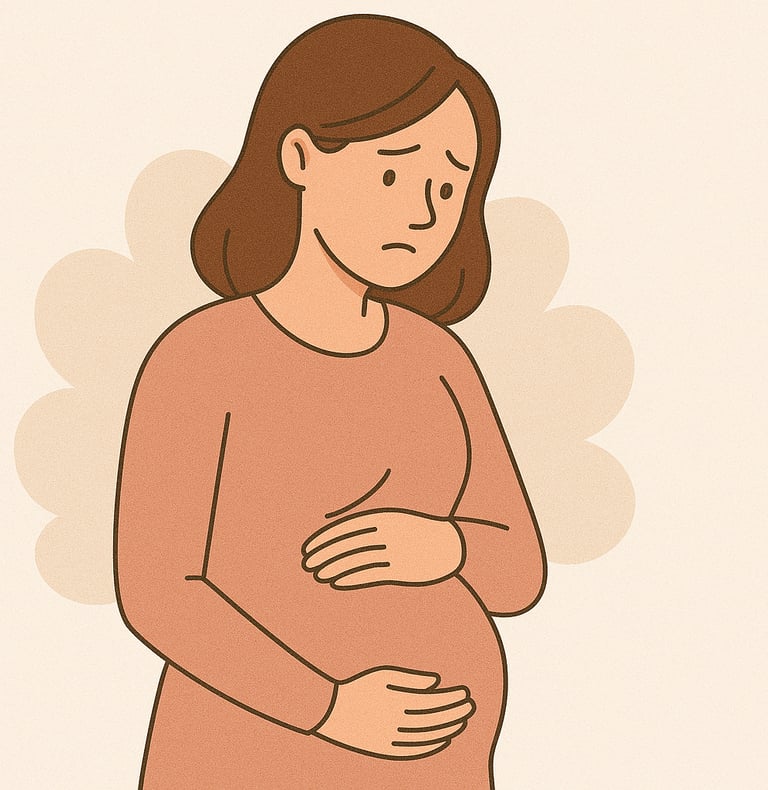
Pregnancy is often described as a magical time, full of joy and excitement. Yet for many expectant mothers (and fathers too), these nine months also come with another reality: prenatal anxiety. This particular form of anxiety revolves around fears related to childbirth, the baby’s health, and one’s ability to be a “good” parent.
Talking about these worries isn’t a sign of weakness. On the contrary, it’s an essential step toward a calmer, more confident parenthood.
🤔 What is prenatal anxiety?
Prenatal anxiety refers to the worries and fears that surface during pregnancy. They vary in intensity: some parents experience only occasional concerns, while others live with daily, overwhelming stress.
The main sources of anxiety are:
Childbirth: fear of pain, medical complications, or losing control.
The baby’s health: fear of malformations, genetic issues, or that “something will go wrong.”
Parenting skills: fear of not being a “good enough” mother or father, of failing in this new role.
These feelings are normal—they reflect how deeply meaningful this life event is.
🗣️ Voices of expectant and new parents
💬 Sarah, 29, 6 months pregnant
“I was obsessed with the idea that I wouldn’t be able to handle the pain of childbirth. I even had nightmares about it. When I spoke to my midwife, she reassured me that many women feel the same way. Just knowing I wasn’t alone brought me relief.”
💬 Karim, expectant father
“People don’t talk enough about fathers’ anxiety. I was terrified I wouldn’t know how to support my wife during labor, and even more scared I wouldn’t be good enough once the baby arrived. I was afraid of ‘messing it up.’”
💬 Élodie, mom of a baby boy
“During my pregnancy, I was terrified before every ultrasound. I always braced myself for the worst. Looking back, I see my fears were disproportionate—but at the time, they kept me from enjoying my pregnancy.”
These stories show one thing clearly: prenatal anxiety is not an isolated experience. It’s universal.
🔍 Why do these fears appear?
Prenatal anxiety arises from a mix of factors:
Hormonal changes, which heighten emotions.
The unknown: giving birth is a unique experience, impossible to fully predict.
Social pressure: the expectation of being the “perfect mom” or “ideal dad” can feel crushing.
Personal history: past medical challenges, miscarriage, or hearing negative birth stories can intensify fears.
In truth, these worries are the brain’s way of preparing for the unpredictable. They’re not weakness—they’re proof of how seriously parents take the arrival of their baby.
🌱 How to ease prenatal anxiety
Talk about your fears: with your partner, a midwife, or a therapist—sharing helps put worries in perspective.
Prepare actively: childbirth classes, prenatal yoga, or breathing exercises restore a sense of control.
Stay informed—without overdoing it: knowing the basics of labor can reassure you, but endless scrolling through stressful forums often makes anxiety worse.
Practice self-kindness: fear doesn’t mean failure. It means you care deeply about your new role.
🌟 In sum
Prenatal anxiety is common, normal, and nothing to be ashamed of. It often shows up as fears about childbirth, the baby’s health, or one’s parenting abilities. Talking, preparing, and accepting these emotions can transform them into strength—the strength to welcome a baby with greater calm and confidence.
Becoming a parent means stepping into the unknown, with all its doubts and fears. But it also means discovering a hidden resilience, born from love for this child on the way. Accepting anxiety already gives it less power. Every parent’s path is imperfect—but it’s in those imperfections that the true beauty of parenthood lies.
Motherhood
Your space dedicated to motherhood and well-being.
CoNTACT
bellytobaby.fr@gmail.com
© 2025. All rights reserved.