


🌸 Postpartum Depression: Understanding Better to Act Better
Postpartum depression affects many women after the birth of their child 🌸. This article explains how to recognize it, prevent it, and treat it—while highlighting its impact on the mother–baby bond. Through testimonies and practical advice, it reminds us of an essential truth: postpartum depression is an illness, not a lack of love. 💕
2 min read
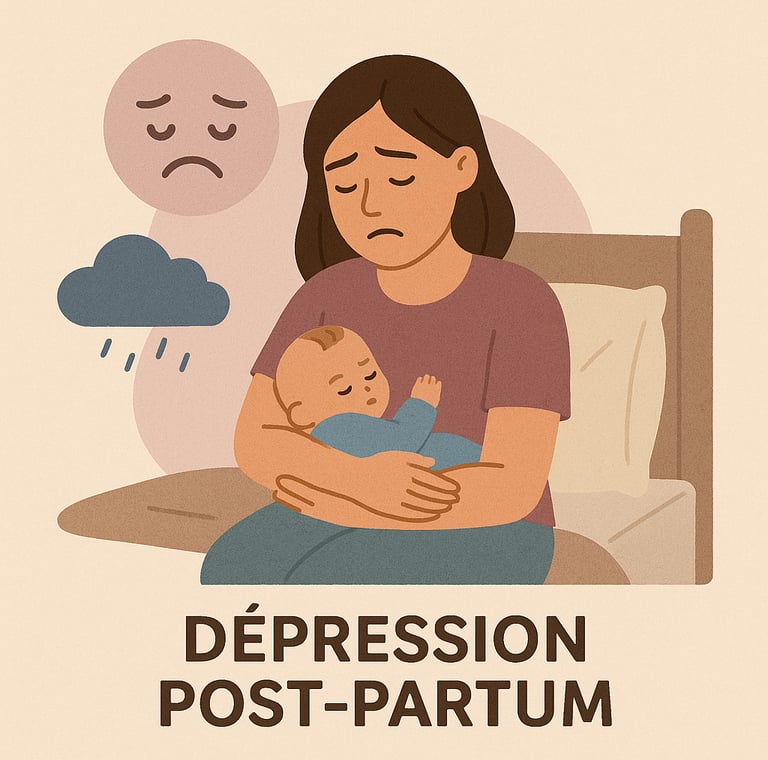
Giving life is often described as a moment of pure joy. Yet for some women, the weeks following birth are marked by deep sadness, emptiness, or a loss of energy. This is what we call postpartum depression.
Unlike the “baby blues,” which is short-lived and affects many new mothers in the first days after delivery, postpartum depression lasts longer and requires special attention.
🤔 How to recognize it?
Postpartum depression usually appears in the weeks or months after birth. Common symptoms include:
persistent sadness, frequent crying,
extreme fatigue that doesn’t go away with rest,
loss of interest in activities that once brought joy,
difficulty bonding with the baby,
feelings of guilt or inadequacy as a mother.
👉 A diagnosis must be made by a healthcare professional (doctor, psychiatrist, midwife). The earlier it’s identified, the more effective the care.
🗣️ Mothers’ voices
💬 Claire, 32, mom to a baby girl
“Everyone kept telling me I should be happy. But I didn’t feel anything… just crushing fatigue and a constant urge to cry. I felt like a ‘bad mother.’ When my doctor mentioned postpartum depression, I felt ashamed at first—but then I realized it wasn’t my fault.”
💬 Nadia, 27, mom to a baby boy
“I worried so much about my baby that I couldn’t sleep, even when he did. I had no energy, no joy. With psychological support, I slowly began to regain confidence.”
These stories show that postpartum depression is not a lack of love—it’s an illness that disrupts a mother’s emotional balance.
🔍 Prevention: Can it be reduced?
It can’t always be avoided, but some protective factors help:
Being informed during pregnancy about risks and symptoms.
Having supportive, non-judgmental people around.
Expressing emotions instead of keeping them in.
Planning how tasks will be shared with a partner to prevent exhaustion.
Routine screenings by healthcare providers after childbirth are also an important preventive measure.
👩🍼 Impact on the mother–baby bond
Postpartum depression can make bonding more difficult:
Some mothers struggle to respond to their baby’s needs.
Babies may sense emotional unavailability, showing more restlessness or sleep issues.
However, with proper care, the bond can heal and grow stronger.
👉 Most importantly, postpartum depression does not define motherhood. With support, the relationship between mother and baby can thrive.
🌱 How to act and seek help?
Consult a doctor, midwife, or psychologist promptly.
Join a support group for moms going through the same experience.
Accept help from loved ones (rest, household support, baby care).
Consider treatment (therapy, and sometimes medication safe for breastfeeding) if needed.
🌟 Postpartum depression is common, yet still too taboo. It’s neither a sign of weak love nor failed motherhood. Early diagnosis, prevention, and support can lessen its impact and protect the mother–child bond.
Being a mother doesn’t mean being perfect, or feeling everything instantly. Motherhood is a complex journey, filled with both light and shadow. Recognizing postpartum depression opens the door to healing—and gives every mother the chance to reconnect with her baby, and with herself. Because a supported mom is a stronger mom 💜.
Motherhood
Your space dedicated to motherhood and well-being.
CoNTACT
bellytobaby.fr@gmail.com
© 2025. All rights reserved.