


🤱 Nutrition and Breastfeeding: Nourishing Your Baby by Nourishing Yourself
Breastfeeding means offering your baby a one-of-a-kind superfood: your milk. Your body already knows how to make it perfectly. But by staying well hydrated 💧, eating a variety of colorful, balanced foods 🥗, and adding a few key nutrients (omega-3s, iodine, vitamin D) 🌟, you support your own energy and make this precious gift even richer for your little one. A simple reminder: by taking care of yourself, you’re also taking care of your baby 💕.
2 min read
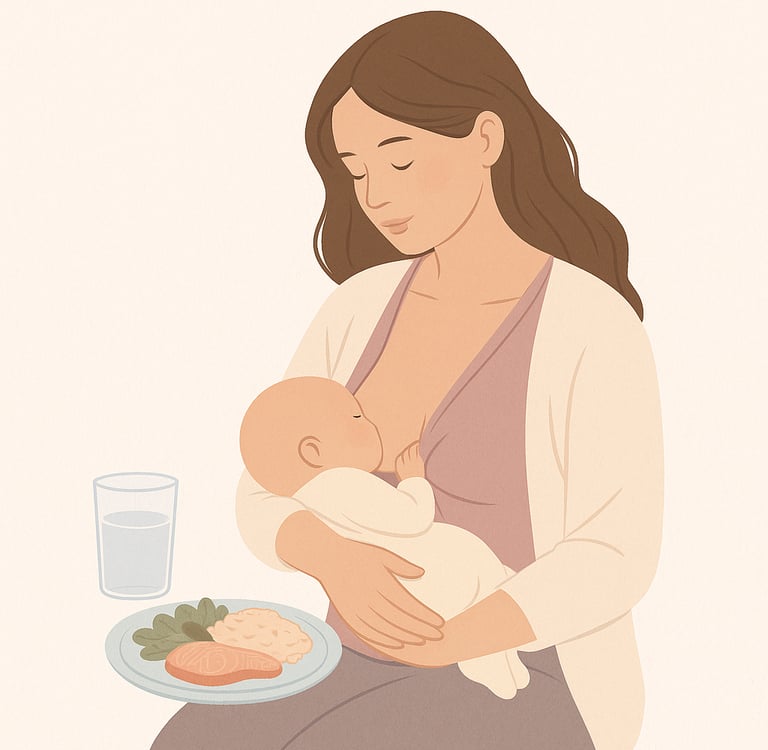

Breastfeeding is a bit like becoming the head chef of a five-star kitchen 🍽️: your body prepares, day and night, meals perfectly tailored to your baby’s needs. And that meal is your milk.
The good news: your milk is always high quality, even if your diet isn’t perfect. But—just like any great chef—you can refine the “recipe” with the right ingredients to keep your energy up and enrich your milk even more.
In this article, let’s explore how to take care of your nutrition so you can experience breastfeeding with more ease and strength.
🍽️ Extra calories and fluids
🔥 A factory running 24/7
Breastfeeding is like running a little factory nonstop. Your body produces about 25 oz (750 ml) of milk a day at first, and sometimes over a quart later! That means it needs a bit more energy to keep up.
Plan on about +500 calories per day.
👉 For example:
A bowl of yogurt with fruit and nuts
A slice of whole-grain toast with avocado
A smoothie with banana, almond milk, and chia seeds
No need to double your plate—just add healthy, nourishing snacks.
💧 Water: your #1 ally
Breast milk is 87% water. Think of yourself like a fountain: if the tank is empty, nothing flows.
Aim for 1.5 to 2 liters (6–8 cups) per day.
A great trick: drink a glass of water at each feeding.
💡 Many moms feel sudden thirst as soon as their baby latches. Totally normal—your body is sending a signal!
🌱 Nutrients that boost breast milk
Your milk naturally adapts to your baby’s needs (yes, your body is magical ✨). But some nutrients pass directly into it, so adding more to your diet can enrich your milk.
🧠 Omega-3s (DHA)
Think of these as the electrical wiring that supports brain and eye development.
Sources: fatty fish (well-cooked salmon, sardines, mackerel), walnuts, flaxseeds, canola oil.
🔌 Iodine
Like your body’s Wi-Fi signal—essential for thyroid and brain function.
Sources: seafood, iodized salt.
🎨 Vitamins A & C
The “colors of the construction site”—supporting immunity, growth, and healing.
Sources: carrots, sweet potatoes, oranges, kiwis, broccoli.
🧱 Protein
The bricks and mortar for your recovery and your baby’s growth.
Sources: eggs, lean meats, cooked fish, tofu, lentils.
😣 Foods that might bother baby
Every baby is unique 💕. Some aren’t sensitive to anything; others react more easily.
The usual suspects:
Cabbage, onions, beans → may cause gas or fussiness.
Caffeine → can make baby restless (limit to 1–2 cups/day).
Dairy → occasionally linked to colic, reflux, or skin reactions.
👉 No need to cut foods in advance. Just observe your baby. If you notice a reaction, jot it down and try eliminating that food for a few days.
💡 Tip: keep a small “meals + baby’s reactions” journal—it makes patterns easier to spot.
💊 Possible supplements
Even with a balanced diet, some nutrients are especially important postpartum:
Vitamin D → essential for baby (given as drops from birth, since breast milk alone isn’t enough).
Iodine → sometimes needed if you don’t eat much seafood.
Omega-3s → supplements can enrich your milk if your diet is low in them.
Iron → if you’re very tired, pale, or had significant blood loss at delivery.
👉 Always check with your doctor or midwife before starting supplements.
🌸 Everyday tips for breastfeeding nutrition
Keep a nursing snack box nearby: dried fruit, nuts, cereal bars, water bottle.
Go for simple, colorful meals: homemade soups, grain bowls with veggies + protein, fruit salads.
Don’t hesitate to ask for help 💕—let someone else cook or prep snacks for you.
Listen to your body: hunger and thirst are your best guides.
✨ Your body already creates the perfect food for your baby. By nourishing yourself well, you give your baby more—and you stay energized and supported through this beautiful, demanding season.
Motherhood
Your space dedicated to motherhood and well-being.
CoNTACT
bellytobaby.fr@gmail.com
© 2025. All rights reserved.