


🍼 Eating Well During Pregnancy: A Journey for Two
✨ Discover how to “eat twice as well,” not twice as much: the essential nutrients you need, the foods to enjoy, the ones to avoid, and simple tips to ease everyday discomforts.
2 min read
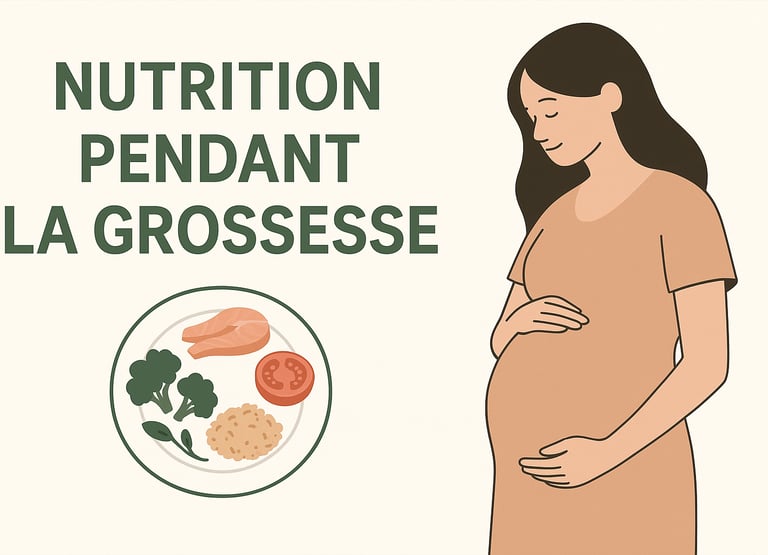

Pregnancy is a bit like preparing for a long journey: your body becomes the “vehicle” carrying your baby. To make the trip smooth, it needs the right fuel, the right tools, and a few regular tune-ups. Nutrition plays a central role—not just for you, but for your little one too.
⚡ Energy: filling the tank without overloading it 🚗⛽
You’ve probably heard the saying “you need to eat for two.”
In reality, it’s more like “eating twice as well.”
First trimester: your energy needs don’t really change.
Second trimester: add the equivalent of a healthy snack each day (+200 calories).
Third trimester: think of a slightly more filling meal (+300 calories).
Think of it this way:
Proteins (meat, fish, eggs, legumes) → the bricks for building your baby’s body.
Complex carbs (whole-grain pasta, bread, rice, beans) → steady fuel to keep you going.
Healthy fats (avocado, nuts, fatty fish) → the oil in the engine, supporting your baby’s brain and eye development.
Fiber + water → like keeping the road clear and smooth, helping digestion run well.
🧰 Vitamins and minerals: your toolbox
Every day your baby is building organs and tissues—and for that, the body needs the right tools:
Folic acid (B9): the architect’s blueprint, preventing issues with nervous system development.
Iron: the oxygen delivery truck 🚚; low levels can cause fatigue or shortness of breath.
Calcium + vitamin D: the concrete and sunlight of the building site, keeping bones strong for you and your baby.
Iodine: your body’s internal Wi-Fi, crucial for brain and thyroid function.
Omega-3s: the electric wiring, helping brain and eye development.
🥦🍓🐟 Everyday allies on your plate
The best approach is variety—like painting with all the colors of the palette:
Fruits and vegetables (colorful and fresh) for vitamins.
Whole grains and legumes for energy and fiber.
Varied proteins: well-cooked meat, fish, eggs, tofu, lentils.
Dairy or fortified alternatives for calcium.
Nuts and seeds: little nuggets of energy and minerals.
🚫 Hidden “stowaways” to avoid
Some foods are best left aside because they can carry risks for your baby:
High-mercury fish (swordfish, shark, bigeye tuna).
Raw or undercooked foods (meat, fish, eggs, shellfish).
Soft cheeses made with unpasteurized milk and some deli meats → risk of bacteria.
Caffeine: limit to 1–2 cups of coffee per day to avoid overstimulating baby.
Alcohol: here, the rule is simple—none is safe during pregnancy.
🌸 Common bumps in the road
Pregnancy often brings little “pebbles on the path”:
Nausea: eat small, frequent meals; try dry crackers or bananas; avoid strong smells.
Heartburn: eat slowly, avoid greasy or spicy foods, keep your upper body slightly raised after meals.
Constipation: lean on fiber + water, and add gentle daily walks.
Weight gain: it’s natural and needed. The amount depends on your pre-pregnancy weight, but remember: every pound is a reserve of love and energy for your baby.
✨ In short: Pregnancy nutrition isn’t about eating more, it’s about eating smarter. Think balance, variety, and kindness toward your body—your baby’s first home.
Motherhood
Your space dedicated to motherhood and well-being.
CoNTACT
bellytobaby.fr@gmail.com
© 2025. All rights reserved.