


🌪️ Colic and Reflux in Infants: Understanding and Soothing
This article explains the difference between colic and reflux in infants 🤱👶. It outlines their signs and causes, and shares simple tips to soothe your baby day to day 🌸. The key message: it’s common, temporary, and in most cases harmless.
2 min read
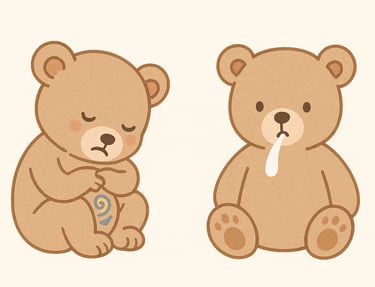

Your baby’s inconsolable crying after feeding, their tummy hardening, or those endless spit-ups that ruin every t-shirt… sound familiar? 😅 You’re not alone—many babies go through colic and reflux in their first months of life. Don’t panic: it’s common, and above all, temporary.
🤔 What are infant colic?
Colic shows up as intense crying, often in the late afternoon or evening 🌙, along with signs like:
a hard, bloated tummy,
legs pulled up toward the belly,
baby squirming and looking uncomfortable.
👉 Colic usually begins around 2–3 weeks, peaks around 6–8 weeks, and gradually disappears by 3–4 months.
🔄 And what about reflux?
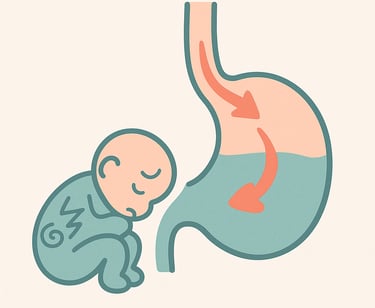
Gastroesophageal reflux (GER) happens when stomach contents flow back into the esophagus, because baby’s digestive valve isn’t fully mature yet.
Two forms exist:
Simple reflux (most common): painless spit-ups, baby smiles and continues gaining weight.
Pathological reflux (rarer): pain, crying during or after feeds, refusing to nurse, slowed or stalled weight gain.
👉 In most cases, reflux is harmless and improves with time, usually between 6–12 months.
🌱 What causes colic and reflux?
Immature digestive system 🍼
Air swallowed while feeding 💨
Spending a lot of time lying flat
Developing nervous system (for colic)
In short—it’s not due to a “bad diet” or your breast milk. This is not your fault 💖.
💡 How to soothe your baby
For colic:
Carry your baby in a sling or against you 🤱
Gently massage their tummy in circular motions 🤲
Move their legs like cycling 🚲
Enjoy skin-to-skin contact to calm them 💕
For simple reflux:
Keep baby upright for 15–20 minutes after feeding
Offer smaller, more frequent feeds if needed
Avoid tight diapers or clothing
Slightly incline the mattress (with medical advice)
🚨 When to consult a doctor
Seek medical advice if your baby:
refuses to feed,
isn’t gaining or is losing weight,
vomits forcefully,
has blood in stools or spit-up,
has persistent intense crying despite comfort measures.


Motherhood
Your space dedicated to motherhood and well-being.
CoNTACT
bellytobaby.fr@gmail.com
© 2025. All rights reserved.