


🌸 Breastfeeding Basics: Everything You Need to Know
Breastfeeding isn’t just about feeding your baby—it’s about creating a unique bond 💖. In this article, you’ll discover the many benefits: for you, for your baby, and even for the planet 🌍. We’ll explore the “magic recipe” of breast milk that changes over time 🥛, the importance of skin-to-skin and that very first feed right after birth 👶, the most comfortable breastfeeding positions 🪑, and how to know if your baby is feeding well ✅. You’ll also see that breastfeeding doesn’t follow a strict schedule ⏱️—it’s all about feeding on demand. In short, this is a simple, reassuring guide to help you approach breastfeeding with more confidence and serenity 🤱✨.
3 min read
Breastfeeding is so much more than a way to feed your baby. It’s a unique moment of closeness, warmth, and connection. But when you’re starting out, it often comes with many questions: Is my milk enough? How do I know if my baby is drinking well? Which positions should I use? Don’t worry—here’s a simple, practical overview to guide you.
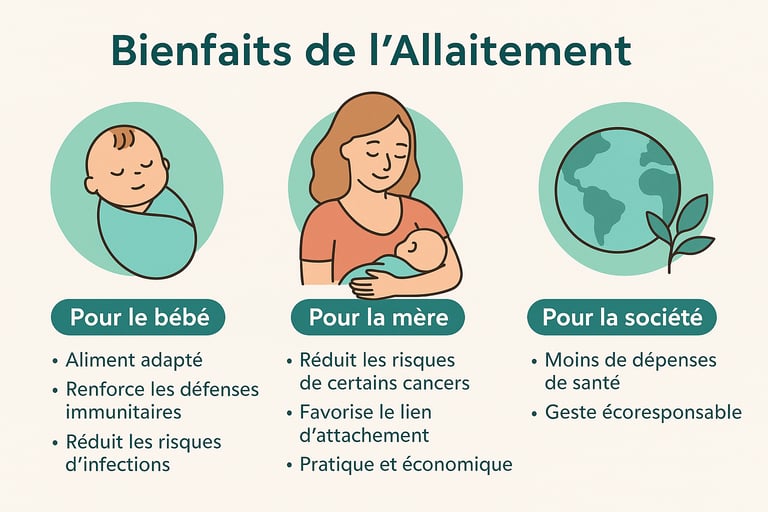
💎 The Benefits of Breastfeeding
For your baby
Breast milk is perfectly tailored to their needs.
It contains antibodies that strengthen their immune system.
It reduces the risk of ear, throat, and digestive infections, as well as allergies.
It supports easy digestion and helps prevent colic.
For you, the mother
Breastfeeding helps your uterus return to its normal size more quickly.
It lowers the risk of certain cancers (breast, ovarian).
It strengthens emotional bonding with your baby.
Bonus: it’s convenient and free!
For society
Fewer illnesses = reduced healthcare costs.
It’s eco-friendly (no cans, no disposable bottles).
🍼 The Composition of Breast Milk
Breast milk is like a living “magic potion” that evolves over time:
Colostrum (the first few days): thick, yellow-orange, rich in antibodies and proteins.
Transitional milk (around days 3–15): more abundant, changes in color, prepares the baby’s digestive system.
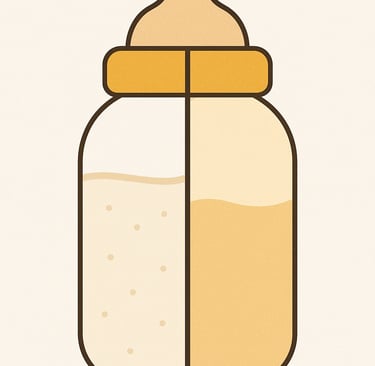
Mature milk (after two weeks): consists of two phases—watery and hydrating at the start of the feed, then creamier and fat-rich toward the end.
👉 The result: your baby always gets exactly what they need, when they need it.
🤱 Getting Started Right After Birth
The first moments matter a lot:
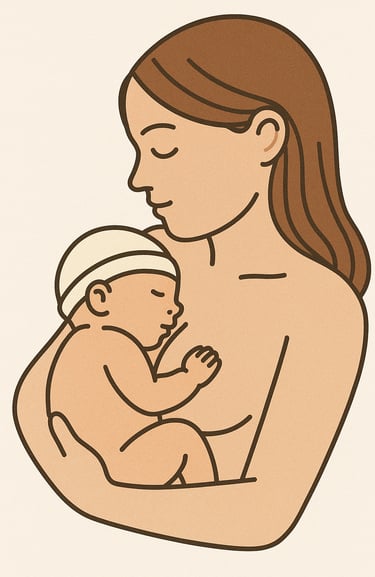
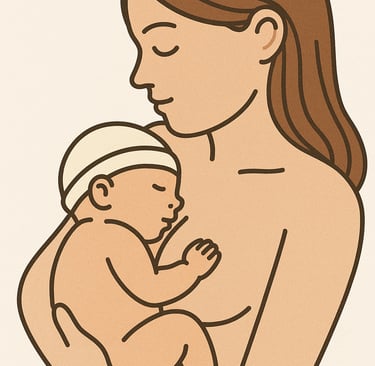
Skin-to-skin contact helps regulate temperature, heart rate, and soothes your baby.
Early feeding (within the first hour) stimulates milk production.
Let your baby find the breast on their own—they have an instinctive rooting reflex (they’ll even crawl to get there!).
🪑 Comfortable Breastfeeding Positions
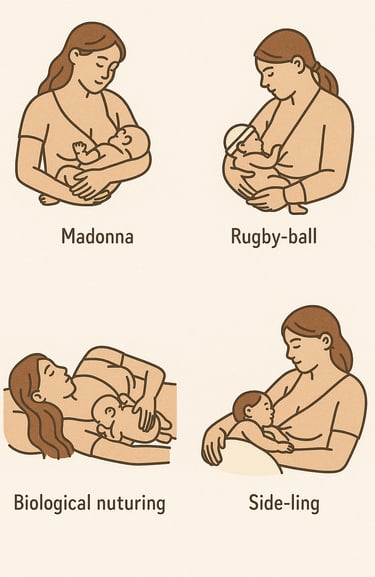
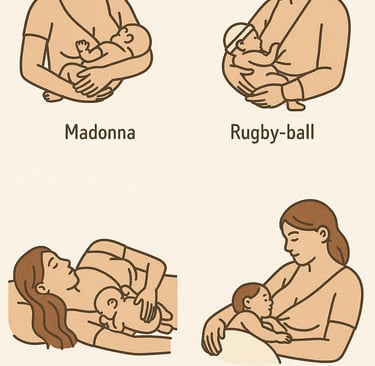
There isn’t just one “right” position—choose what feels best for you and your baby:
Cradle hold: baby across your arms, tummy to tummy.
Football hold: baby tucked under your arm—especially helpful after a C-section.
Side-lying: great for nighttime feeds or resting.
Biological nurturing: you recline slightly, baby lies on you and naturally finds the breast.
✨ Tip: Rotate positions regularly—this prevents engorgement and helps baby fully drain the breast.
👶 Signs of a Good Latch and Effective Feeding
Wondering if your baby is really drinking? Look for these signs:
✅ Lips flanged outward on the breast
✅ Mouth wide open, covering a good part of the areola
✅ Audible or visible swallowing
✅ Rhythmic sucking with pauses
✅ Relaxed and content after feeding
🚫 Red flags: persistent pain, cracked nipples, baby frustrated at the breast → reach out to a lactation consultant or midwife.
⏱️ Frequency and Duration of Feeds
Forget the clock and rigid schedules—breastfeeding works best on demand:
Newborns may nurse 8–12 times a day (sometimes more!).
Each feed lasts 10–30 minutes on average, but it varies.
Most important: offer the breast as soon as baby shows signs of waking (mouth movements, hands to mouth, squirming)—before the tears.

Motherhood
Your space dedicated to motherhood and well-being.
CoNTACT
bellytobaby.fr@gmail.com
© 2025. All rights reserved.