


🌸 Baby Blues: Understanding This Phase and Distinguishing It From Postpartum Depression
The baby blues affects the majority of new mothers in the days following childbirth. This article explains its key characteristics, distinguishes it from postpartum depression, and offers gentle, supportive strategies to navigate this stage with more understanding and care. 🌸
2 min read
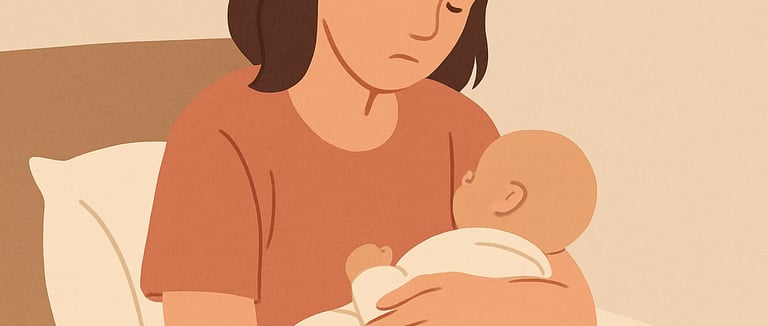
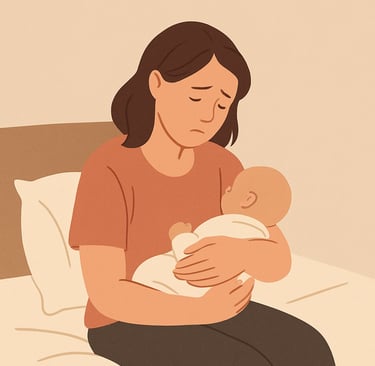
Welcoming a baby is a life-changing event. In the days following birth, many women experience heightened emotions, sudden tears, and mood swings. This phenomenon has a name: the baby blues.
Often brushed off as “normal,” it deserves to be understood and distinguished from postpartum depression, which is more serious and longer-lasting.
🤔 What is the baby blues?
The baby blues affects about 60–80% of new mothers.
It usually appears between the 3rd and 5th day postpartum and fades on its own within a few days.
Common signs include:
Sudden tears, without an obvious reason
Strong emotional sensitivity and mood swings
Intense fatigue
Feeling overwhelmed or vulnerable
Sometimes irritability or anxiety
👉 These symptoms typically resolve on their own in less than two weeks.
Possible causes:
Hormonal shift: estrogen and progesterone levels drop abruptly after delivery
Sleep deprivation: interrupted nights take a toll both physically and emotionally
Emotional intensity: giving birth is overwhelming, and the “crash” that follows is real
Social pressure: ideals of the “perfect mother” or “maternal instinct” can make women feel inadequate
🗣️ Mothers’ voices
💬 Julie, 28
“I cried for no reason, sometimes just watching my baby sleep. I felt swamped, even though medically everything was fine. Luckily, my midwife reassured me: it was the baby blues, not depression.”
💬 Sophie, 34
“I wanted to laugh and cry within the same hour. It was strange and intense, but after a few days, it calmed down.”
💬 Élodie, 26, after a C-section
“Between the pain, the fatigue, and the hormones, I felt like I was in a whirlwind. I could laugh and cry in the same minute. Hearing that my mom had gone through the same thing helped me.”
💬 Midwife, 15 years of practice
“What I always tell new moms is that the baby blues isn’t weakness—it’s a transition. Body and mind are readjusting after something enormous.”
🔍 How is it different from postpartum depression?
Baby blues:
Short-lived (a few days)
Linked to hormonal and emotional upheaval
Resolves without lasting effects if the mother is supported
Postpartum depression:
Persists for weeks or months
Marked by ongoing sadness, loss of pleasure, difficulty bonding with the baby
Requires medical and psychological care
👉 The main difference lies in duration and intensity. If sadness lasts beyond two weeks, it’s crucial to seek professional support.
🌱 Coping with the baby blues
Even though it passes quickly, the baby blues can feel destabilizing. Helpful strategies include:
Rest whenever possible—even short naps help
Accept help with meals, housework, or baby care
Express feelings openly to a partner, friend, or midwife
Release guilt—crying does not mean you don’t love your baby
Remind yourself: most mothers experience this
👩👩👦 The role of loved ones
Support is essential:
Listen without judgment: don’t minimize with “you’ll be fine”—instead, hold space for the emotion
Offer practical help: cook, clean, or take the baby for a bit
Watch for persistence: if symptoms last beyond two weeks, encourage her to seek professional care
✨ In short
The baby blues is a common, short-term emotional storm that arises in the first days after childbirth. It is not the same as postpartum depression, which is more serious and enduring. With rest, support, and compassion, the baby blues usually fades naturally.
Think of it as a brief but intense wave after birth. Those tears are not failure—they’re part of an inner transformation. Becoming a mother means not only welcoming a child but also embracing your own vulnerability. And in that vulnerability, a new strength slowly takes root. 🌸
Motherhood
Your space dedicated to motherhood and well-being.
CoNTACT
bellytobaby.fr@gmail.com
© 2025. All rights reserved.